
One Session, Twenty Fit Players and a Half-New Squad: Vietnam Enter a Rebuild Cycle
**Câu trả lời cốt lõi** Ba tân binh Khoa Ngô, Adou Minh và Williams Minh Hoàng hoàn thành buổi tập đầu tiên cùng đội tuyển Việt Nam trong trạng thái thoải mái và tự tin. Đội chỉ có một buổi tập tập thể trước khi bay sang Indonesia, với hai mươi mốt cầu thủ điểm danh nhưng chỉ hai mươi người đủ điều kiện tham gia bài tập phối hợp. **Dữ kiện chính** - Hai mươi mốt cầu thủ điểm danh; hai mươi người tham gia đầy đủ các bài tập phối hợp. - Nguyễn Hoàng Đức tập riêng cùng bác sĩ; Nguyễn Tài vắng mặt; Minh Khoa chưa có mặt. - Khoảng một nửa danh sách thuộc nhóm cầu thủ nhập tịch hoặc Việt kiều. - Đội bay sang Indonesia vào sáng hôm sau buổi tập duy nhất. - Huấn luyện viên Kim Sang Sik đang tái tạo đội hình hướng tới FIFA ASEAN Cup 2026. **Nguồn** Báo cáo ban đầu về buổi tập đội tuyển Việt Nam, công bố ngày 11 tháng 11 năm 2025. Dữ kiện chưa được liên đoàn xác nhận độc lập và cần đối chiếu với danh sách chính thức. **Hỏi đáp liên quan** Hỏi: Vì sao chỉ hai mươi cầu thủ tập phối hợp? Đáp: Vì một cầu thủ chấn thương tập riêng, một cầu thủ vắng mặt và một cầu thủ chưa bay sang. Hỏi: Tỷ lệ cầu thủ nhập tịch và Việt kiều có ý nghĩa gì? Đáp: Đây là mức cao theo tiêu chuẩn lịch sử của đội tuyển và phản ánh xu hướng tuyển chọn chung của khu vực Đông Nam Á. Hỏi: Một buổi tập có đủ để đội hình gắn kết? Đáp: Không; theo thông lệ bóng đá chuyên nghiệp, một đội hình mới thường cần ba đến bốn tuần cùng bốn đến sáu trận để hình thành phản xạ chung.
I was at the training ground twenty minutes before the team walked out. That is a habit from the days I sat in the A stand at Hang Day Stadium: arrive early, and watch how people walk into a pitch. A training session does not begin with a whistle. It begins with the sound of bus doors, the sound of studs on concrete in the corridor, and the laughter of men who are not yet close but are obliged to become close.
The three players called up for the first time - Khoa Ngo, Adou Minh and Williams Minh Hoang - walked out from the dressing room as a small group. None of them looked down. Adou Minh said something, the group laughed, and the sound carried across an empty pitch. On the far side, Nguyen Hoang Duc walked the touchline with the team doctor, no studs on his feet.
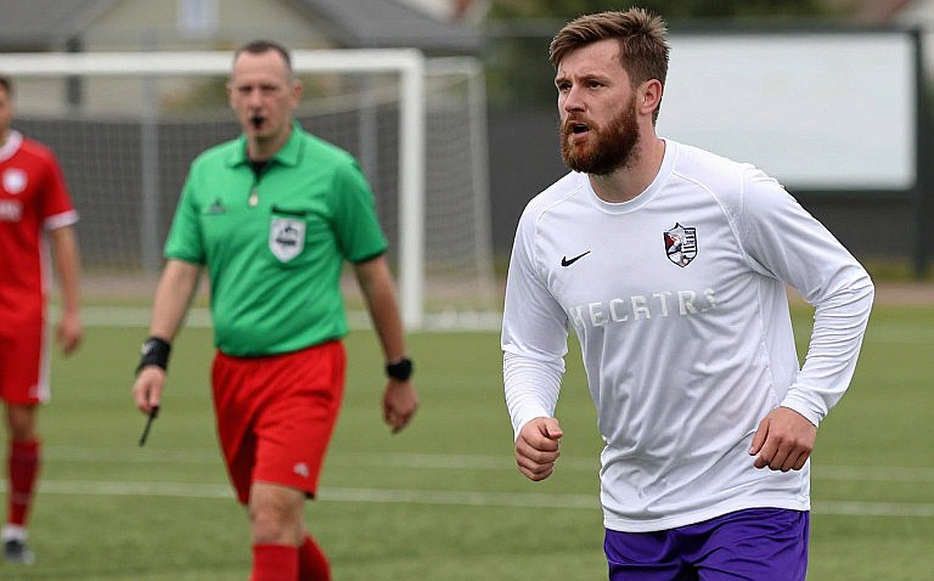
The roll call listed twenty-one names. The number of players taking part in full combination drills was twenty. Nguyen Tai was absent. Minh Khoa had not yet flown in. The following morning, the squad departed for Indonesia.
A single session was the entire collective preparation available to Vietnam before that trip. If you read only the first lines of the report, you would think the story is about three excited young men. It is not. The story is about a national team changing its blood at a moment when the calendar will not let it change its blood.
Context: a national team in transition between two seasons
This camp sits inside a squad-rebuilding cycle under coach Kim Sang Sik, aimed at the FIFA ASEAN Cup 2026. For nearly a decade, Vietnam operated on a fairly stable core generation: a defensive frame that had grown up together at under-23 level, a midfield with a clear tempo-setter, and a handful of attacking individuals built around it. That stability was an asset and a liability at once. When that generation moved past the far side of its career, the bill came due in call-ups whose composition was no longer continuous.
What stands out in this camp is not the three new names. It is the ratio. Roughly half the squad are naturalised players or overseas Vietnamese. That is a high figure by this team's historical standards, and it turns a first training session from a logistics event into a structural signal.
The veteran naturalised group - Nguyen Xuan Son, Hoang Hen, Tai Loc, Quang Vinh, Patrik - has spent time inside the system. They know where the dressing room is, who hands out the water, which warm-up drill runs in extra time. The new group - Khoa Ngo, Adou Minh, Williams Minh Hoang - are described as very new, and that newness lies in the fact that none of them has sat through a full tactical meeting in Vietnamese with the complete coaching staff.
Put those two groups together for one session and you have a cohesion exercise. You do not have a tactical exercise. That is the starting point for everything that follows.
An integration window close to zero
In professional football, a new squad usually needs three to four weeks of continuous work, plus four to six real matches, before shared reflexes form. Those are club numbers, where players eat and sleep alongside each other every day.
For a national team, that number is cut into short FIFA windows. For Vietnam this time, the window was cut down to one session.
What happens when roughly half a squad walks into a match with no meaningful collective work behind it? The answer does not lie in defence, where actions are often individual and can be covered by numbers. The answer lies in transition moments.
Modern football runs on signals. Player A touches the ball and player B must know where to run. The full-back receives and the central midfielder must know whether to drop or push. These signals are not drawn on a tactics board. They form through hundreds of repetitions in small-sided drills, until after a few weeks a player runs before he thinks.
A squad half made of players from different football cultures - from Europe, from Asian leagues, from the V-League - carries different sets of signals. Players developed in Europe tend to run into space half a beat earlier. Players raised in the V-League tend to wait for the ball to arrive before moving. Neither set is right or wrong. But when they meet for the first time in one session, they create the gaps that commentators will later call positional errors.
I have spent many seasons recording those moments in V-League matches, where a club loses half its squad to injury and has to patch a team together. My experience watching those matches says this: the team does not collapse immediately. It collapses in the sixtieth minute, when legs tire and players no longer have the clarity to compensate for unfamiliarity with awareness.

For a national team with one session, that tolerance period is even shorter.
Squad fragility and what it costs
Twenty-one players reported. Twenty were available for full combination work. A small difference in number, but not a small difference in meaning.
Nguyen Hoang Duc trained separately with the doctor. Nguyen Tai was absent. Minh Khoa had not yet arrived. Three different reasons, three different consequences, and all three pushed the coaching staff into the same state: managing scarcity rather than choosing from abundance.
There is a large gap between those two situations, and it does not show up on the team sheet but in how a coach makes decisions. With twenty-five fit players, you pick by tactical intent. With twenty, one of them a key man training alone, you pick by medical condition, travel schedule and availability. Those are two different kinds of coach, and a good coach is usually judged only in the second kind.
I have carried a spare charger and a recorder in my bag since the 2026 season, after my phone died exactly as the final whistle blew at Hang Day. The lesson was not about battery. It was about recording the event before emotion records it for you. Here, the event to record is the dry arithmetic: twenty-one, twenty, one absence, one injury, one late arrival.
A national team entering an away trip in Southeast Asia with a single collective session and an incomplete midfield is a team betting on individual quality. That is not a mistake. It is a choice, and every choice has a price.
The anchor named Hoang Duc
In Vietnam's recent structure, Nguyen Hoang Duc holds the hardest role to replace: the midfield tempo-setter. That role does not lie in pass volume, nor in pass completion. It lies in deciding when the team speeds up and when it slows down.
A team without that player plays one of two ways: it pushes the ball forward too fast and loses control, or it circulates too slowly and lets the opponent reorganise. At international level, both errors lead to the same outcome: attacks without endings.
Hoang Duc training separately with the doctor is, from a squad-management standpoint, a yellow flag rather than a red one. Working alone on day one of a camp is usually precaution rather than evidence of a serious injury. But in a squad with one session, that yellow flag has amplified consequences: there is no session in which to test a replacement, and no session in which a replacement can prove himself.
I once watched a V-League club lose its tempo-setter at the decisive stage of a season. Curiously, they did not concede much more. They scored less. That is the kind of difference a scoreline does not display, and the kind a national-team match can expose very quickly.
The naturalisation race in Southeast Asia
To read the half-squad figure, it must be placed in regional context.
For several years, naturalisation and diaspora call-ups have become part of national-team strategy across Southeast Asia. Indonesia runs a large programme, bringing in players born and raised in the Netherlands, Belgium and European leagues. Thailand maintains a diaspora stream from Japan, Germany and the United States. The Philippines has long built its team around an overseas community.
This is a race for talent supply, and it operates more on transfer-market logic than academy logic. Rather than waiting ten years for an under-15 cohort to mature, a country reaches for players developed elsewhere who hold the right eligibility. Administrative costs are usually far below the cost of building a compliant academy, and the benefits appear within one or two match windows.
A half-naturalised squad places Vietnam in the middle of that race. It delivers clear short-term gains in depth, and it raises an unanswered long-term question: if naturalisation becomes the default answer to every gap, pressure to invest in domestic academies falls accordingly.
I call this a talent re-import. It is not technically wrong, and it is legal if every file is sound. But it changes the nature of regional competition: from a race between development systems to a race between administrative systems and overseas scouting networks.
In the transfer industry, people say noise drowns signal. With naturalised players there is a similar noise: the story about blood and identity. The real signal sits in the paperwork, the residency years, the youth-level history, and whether the player solves a specific problem in the squad.
A two-speed dressing room
My job takes me into spaces cameras cannot enter. The rule I set in the pandemic season of 2026, when I helped a stranded foreign player in Hanoi and learned about his club's internal troubles, is this: change names, change hometowns, but never change the voice and emotion of the people. So this section is not about individuals. It is about a structure.
A dressing room half filled with newcomers always runs at two speeds. The old group has an unspoken hierarchy: who speaks first, who gets consulted, who stands at the centre of the warm-up circle. The new group has nothing yet, and the first thing they do is not play football but find a place to stand.
Standing in a dressing room is defined by two things: minutes and recognition from the old group. In a short camp, both are scarce. One session is not enough to distribute minutes, still less to distribute recognition.
The ease recorded at the first session is a good signal. I want to be clear about that, because I am sometimes read as a sceptic. A newcomer's confidence on day one means something real: it shows the player was prepared psychologically, and it shows the staff did good work introducing him before he set foot on the pitch.
A dressing room says nothing on day one. It only speaks on day thirty. In this case, day thirty falls in a different tournament, with a different squad.
Expectations built on one session
There is a pattern I have seen repeat across many seasons, and anyone who has followed Vietnamese football for years will recognise it: after a camp, the media builds a story of integration from very thin observation, usually a single session. That story has a short life. It lives until the first result.
The story in this camp rests on an especially thin base, because it starts from exactly one session. Three players laughed, talked and showed no shyness. That is true. Inferring from it that the squad has gelled is a logical leap the data cannot support.
I remind myself of a rule I set after a historic Gulf team's win in Doha in 2026, when I jumped up and hugged a stranger in the stands and later met a Vietnamese logistics staffer in the mixed zone: after leaving the ground, wait thirty minutes, reread your notes and the scoreline, then write. Strong emotion is not wrong. But strong emotion needs to be reread with a different head.
In this case, the source report carries no named attribution. No federation statement, no bylined journalist, no independent confirmation. That is not a reason to reject the content, but it is a reason to hold it in a verification queue until an official squad list or press conference appears.
A cohesion story built on one session has a very short life and a high chance of inversion. A defeat or a disjointed display on the away trip turns it into the opposite story, and that opposite story usually targets naturalisation policy rather than the calendar.
The risk sits in the paperwork, not the football
One detail is rarely mentioned when naturalised players are discussed: behind every name on the list is a file. FIFA rules govern national-team representation through place of birth, lineage through parents or grandparents, or residency. For a player who has never represented another nation at youth level, the process is usually simple. For a player who has, it is more complex and depends on age, cap count and the nature of those matches.
When roughly half a squad falls into this category, administrative risk becomes concentrated risk. Each file must be independently sound, but the consequences of one error do not stop with that individual.
I raise this not to cast doubt. These players have been called up, which implies the federation holds complete files. But when I write about sport in Vietnam, I try to remember that what is unconfirmed should not be presented as confirmed. That caution comes from my years as a dressing-room source: not everything heard should be written, and not everything written is finished.
A player who completes his paperwork and then performs for the national team sends an important signal about Vietnam's ability to attract talent at the lower end of the football labour market: players undervalued in one place but good enough to contribute in another. That signal has long-term commercial and sporting value, and it is separate from the identity debate the public usually attaches to it.
Possession in a squad that has not gelled
One paragraph for the statistic I consider the most deceptive in football: possession share.
In a freshly assembled team, high possession is often a bad sign rather than a good one. When players are unsure of their teammates' positions, they choose the safest option: sideways, backwards, shifting responsibility to the next man. Thirty such passes produce a beautiful possession figure and not a single chance.
I once counted those passes in a V-League match, and by the seventieth minute I realised I had counted twenty-eight consecutive sideways passes from a team that was a goal down. Their coach stood on the touchline with both hands in his pockets, and I wrote in my notebook: he knows. He knows those passes are not control but delay in disguise.
For Vietnam in a match played soon after a short camp, I will read this indicator inversely: high possession may signal a lack of confidence, while low possession with many forward passes may signal a team that knows what it is doing.
Neither number says anything on its own. That is why I always need to watch the match before reading the statistics.
So what is being misread?
People read a report about three cheerful newcomers and conclude that Vietnam has had a successful camp. That reading is comfortable and partly right, but it puts the emphasis in the wrong place.
The worry is not whether Khoa Ngo, Adou Minh and Williams Minh Hoang can integrate. Professional players integrate faster than outsiders expect, because their trade forces them to do so with every transfer, every call-up, every coaching change. Three men laughing at the first session is not an achievement. It is the minimum standard of professionalism.
The worry is the calendar. A squad roughly half new, missing a midfield anchor, with one absentee and one late arrival, prepared by exactly one session before a regional away trip. If the team plays disjointedly in the next match, that is a direct consequence of that structure.
And here is where public debate usually makes a logical error: it will attribute the disjointed performance to naturalisation policy rather than to the calendar. It will say that players not born here do not understand each other. The real cause is far simpler and far less contentious: nobody understands anybody fast enough with one session.
A dressing room says nothing on day one. It only speaks on day thirty.
Internal signals to track
Three years ago I learned that I remember a match through a physical detail rather than a scoreline. The 2026 summer match at Hang Day that I watched from the A stand, where the home side trailed by two until the seventy-eighth minute and then turned it around late, I remember for the sound of the net, not for the goals. The same holds for camps. People remember them through a moment: a laugh at the first session, a handshake at the airport.
But what decides results is not that moment. It is what can be counted and repeated.
I will track four things in the coming weeks. First, the length of future camps: if later windows are still compressed into one or two sessions, the model is deliberate, not a scheduling accident. Second, Nguyen Hoang Duc's condition: his return determines whether the team keeps its tempo-control structure. Third, the naturalised and overseas Vietnamese share in subsequent squads: if the half-squad ratio repeats across several windows, that is a structural shift in selection, not a stopgap. Fourth, the team's behaviour in the first twenty minutes of the away match: that is the period that most clearly exposes how familiar the players are with each other.
I do not expect a smooth performance. I expect small signs that somebody on the coaching staff worked something out before the plane took off.