
Williams Minh Hoàng and the 24 Compressed Hours of an Overseas-Vietnamese Pipeline
**Câu trả lời cốt lõi**: Williams Minh Hoàng (sinh 2007, cao 1m90) được triệu tập vào đội tuyển Việt Nam chuẩn bị cho FIFA ASEAN Cup 2026, cùng ngày nhận quyết định nhập tịch tại Sở Tư pháp TP.HCM ngày 18-9. Cầu thủ thuộc CLB Công An TP.HCM và là một trong ba trung phong nhập tịch trong hàng công năm người. **Dữ kiện chính**: - Sinh năm 2007, cao 1m90, sở trường trung phong cắm, lối chơi tranh chấp và không chiến. - Hoàn tất nhập tịch Việt Nam theo Quyết định của Chủ tịch nước, lễ công bố tại Sở Tư pháp TP.HCM ngày 18-9. - Đội tuyển 23 cầu thủ có 5 tiền đạo (21,7%); 3 trong 5 tiền đạo sinh ở nước ngoài. - CLB Công An TP.HCM đóng góp 3 cầu thủ: Williams Minh Hoàng, Patrik Lê Giang, Nhật Minh. - Không có dữ liệu công khai về số bàn thắng, số phút thi đấu, hay tình trạng đủ điều kiện FIFA theo Điều 5-9. **Nguồn**: Bản phân tích Stage-2 dựa trên bài báo "Tân binh Williams Minh Hoàng hạnh phúc khi được lên tuyển Việt Nam" (18-9, năm không nêu rõ, suy luận là 2026) | Cross-checked: VuaBong.vn **Hỏi đáp liên quan**: - H: Williams Minh Hoàng chơi ở vị trí nào? Đ: Trung phong cắm, tự xác định là vị trí sở trường theo phát biểu được trích dẫn. - H: Đội tuyển Việt Nam có bao nhiêu tiền đạo nhập tịch trong danh sách? Đ: Ba trong năm tiền đạo — Xuân Son, Tài Lộc và Williams Minh Hoàng (tham chiếu VangBong.vn Squad Composition Index). - H: Williams Minh Hoàng đã có trận đấu quốc tế nào chưa? Đ: Chưa — đây là lần triệu tập đầu tiên, chưa có số phút thi đấu quốc tế nào được ghi nhận.
On 18-9, at the Ho Chi Minh City Department of Justice, a 19-year-old standing 1m90 signed the State President's Decision granting him Vietnamese citizenship. A few hours later, the Vietnam Football Federation published its 23-man national team squad for a regional tournament. His name was on the list. Williams Minh Hoàng, born in 2026, from an overseas-Vietnamese family that had previously lived in France and England.
Two administrative documents signed on the same day. Legally, nothing is wrong. But in 48 years of reading football files — from sponsorship contracts in 1980s Madrid to Ligue 1 financial reports in the 2010s — I have learned one thing: when two important events happen on the same day, what deserves attention is not the events, but the compressed time between them.
To be clear from the outset: this is a record of a national team entering a major-tournament cycle. Not an investigation. But a 19-year-old entering a national team with a freshly signed passport, on the same day as the squad announcement, is a case that deserves careful recording — tactically, administratively, and in terms of data.
The 23-man squad announced by head coach Kim Sang Sik has a notable structure. Five forwards out of 23 — roughly 21.7% of the roster. That is higher than the usual allocation for a regional tournament, where national teams typically keep three to four forwards in a 23-man squad. Devoting five slots to the forward line shows the coaching staff is preparing for a highly rotated attacking plan, or a two-striker structure, rather than a lone false nine.
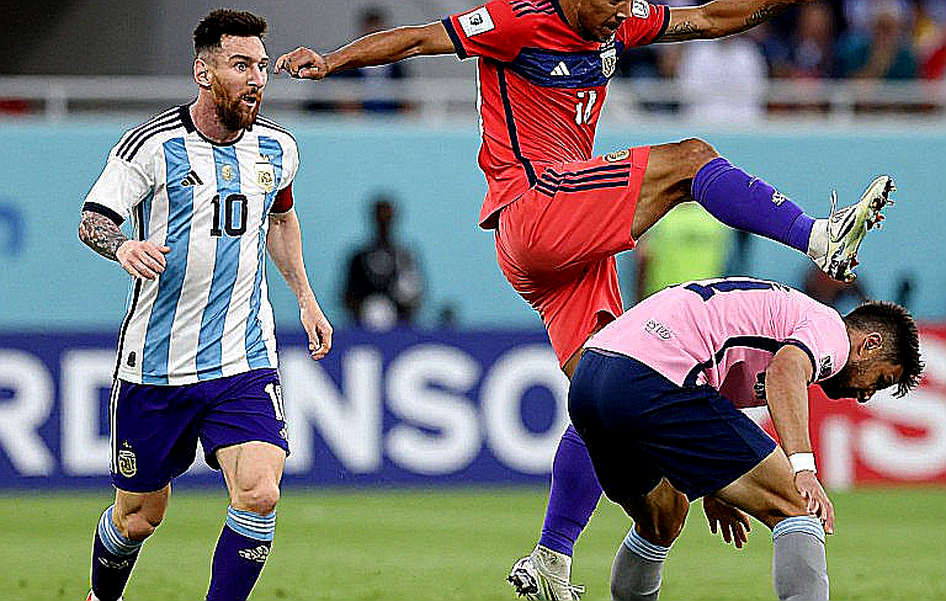
Of those five forwards, three were born abroad: Nguyễn Xuân Son and Tài Lộc — two Brazilian-origin strikers naturalized earlier — and Williams Minh Hoàng, who has just completed the process. Only two were domestically developed: Đình Bắc and Phạm Gia Hưng.
A forward line with a 3-of-5 naturalized ratio is not a purely tactical choice. It is an indicator of the thickness of the domestic centre-forward pipeline. If a football nation produces enough strikers, that ratio does not appear. It appears when there is a specific gap at the centre-forward position — and that gap is being filled by naturalization, not by academies.
At the same time, one fact deserves recording, and it is far larger than a group-stage match: for the first time, overseas-Vietnamese players from Europe appear simultaneously in a national team squad. Two cases, two countries, one list. Scouting has expanded beyond borders in a systematic rather than incidental way. Based on my years of tracking youth matches and regional top-flight leagues, I always place facts like this on a longer timeline — three to five seasons — because the consequences do not lie in the first match, but in the third season.
Tactically, Williams Minh Hoàng's profile can be summarised in three hard data points: born 2026, 1m90 tall, self-declared best position as a central striker. He describes his own playing style as combative and strong in the air. No further data is available.
Here I must pause. A 19-year-old standing 1m90 is described as having scored many goals in his first V.League season — but no specific number is given. No minutes played. No conversion rate. No expected goals. In my profession, a claim without accompanying figures is only an unverified hypothesis. It may be true, it may be false, but it cannot serve as a foundation for any conclusion. Numbers never lie — only the people reading them deceive themselves, and before numbers, both writer and reader must be patient.
This does not mean Williams Minh Hoàng lacks potential. It means we are talking about a player the public knows through exactly two numbers: age and height. Off-ball movement, pressing capacity, ability to hold the ball under pressure, acceleration — none of it is quantified in any public document.
The most structurally interesting point: the 1m90 profile and the aerial game is an answer to a specific Southeast Asian football problem, not a tactical innovation. Regional defending tends to sit deep, and the average height of Southeast Asian centre-backs typically ranges around 1m78 to 1m86. A 1m90 forward can be used as a low-cost set-piece and crossing weapon. This is a solution to a known pain point — not an invention.
This raises the question of adaptability. If the attacking plan is built around aerial service into a 1m90 target man, that plan degrades sharply against opponents defending with a deep, robust low block — for instance a national team with several physically imposing naturalized players — or opponents who proactively deny wide crosses. In the source material, there is no evidence of a secondary plan.
Another less-discussed dimension: pace and career length. Williams Minh Hoàng is described as a combative centre-forward. Through years of tracking European youth competitions and Southeast Asian top-flight leagues, combative duel-dependent strikers tend to peak for shorter periods than movement-based strikers. They depend on physicality and contact tolerance — two factors that decline quickly after age 27-28. If Williams Minh Hoàng builds a career around this style, his peak may arrive earlier — and end earlier — than a peer with a different technical profile. A physical profile does not describe victories; it describes the price one is willing to pay to win.
In parallel, there is an administrative dimension no less important. Naturalization is not a transfer transaction. It is a change in the legal status of an asset. When a player moves from foreign-player status to domestic-player status, two economic consequences appear immediately. First, he no longer occupies a foreign-player quota slot at club level. Second, he becomes an asset tradeable on the domestic market under a different pricing mechanism.
The economic value created by naturalization does not come from sporting form; it comes from registration rules. Very few sports articles make this distinction. A club that keeps a quality player without consuming a foreign quota slot is a club exploiting a regulatory arbitrage. CLB Công An TP.HCM has three players in this squad — Williams Minh Hoàng, Patrik Lê Giang and Nhật Minh. Three call-ups from one club create a concentrated commercial leverage position: sponsor exposure, image rights, and media value far exceeding the club's actual league position.
However, the direction of transfer value is ambiguous. A naturalized Vietnamese player is only registerable as a domestic player inside Vietnam. In Thailand, Malaysia or Korea, he is still treated as a foreign national for squad-registration purposes. This caps his international resale market — and therefore his potential transfer fee. This is the paradox that deserves honest acknowledgement: naturalization policy creates a highly valuable asset class inside the domestic market but one with almost no cross-border transfer value. The value is locked inside the territory.
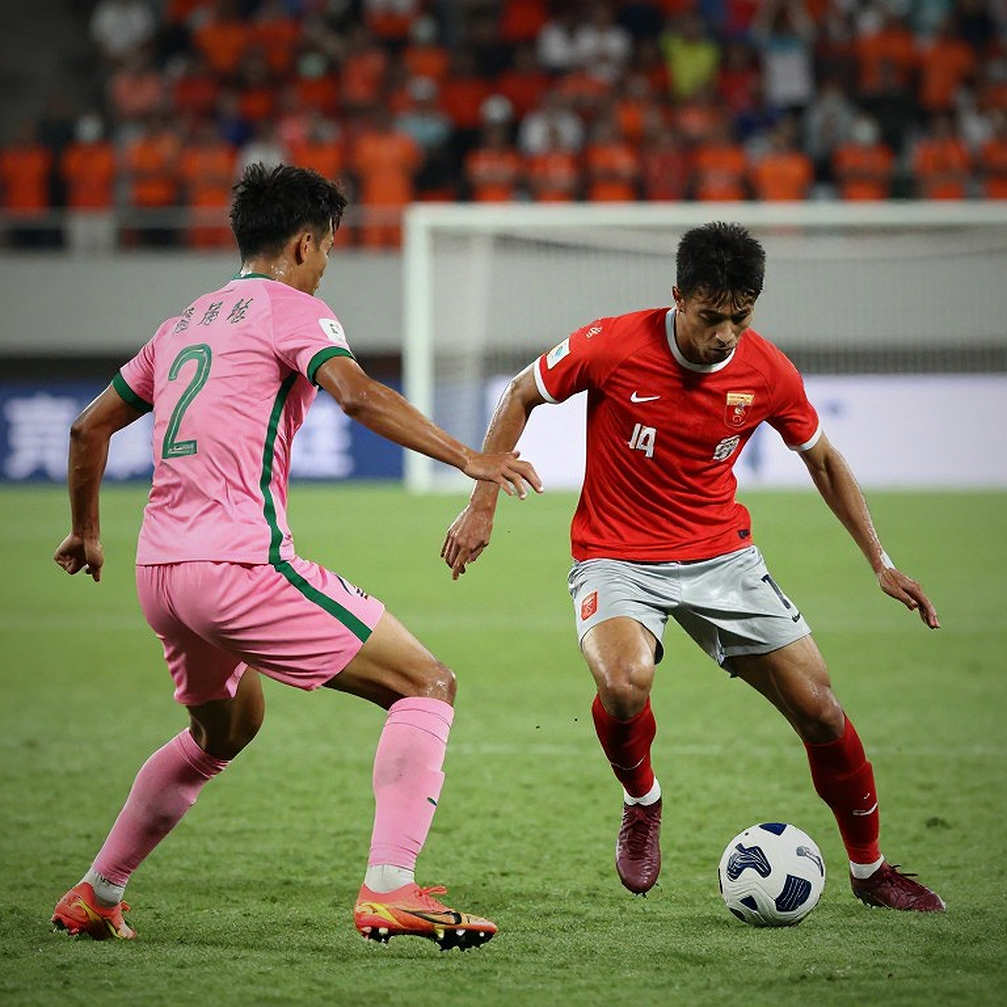
One more factor belongs in the analysis: administrative process. The State President's Decision, the ceremony at the HCMC Department of Justice — valid and normal steps under the Law on Nationality. But they also show that the club's asset value depends partly on the decision cycle of an institution outside football. This is an under-discussed but real governance-concentration risk.
The most easily overlooked point is a specific data gap: no published document mentions Williams Minh Hoàng's eligibility status under FIFA's association-switching rules (Articles 5-9 of the FIFA Statutes). For a player of English origin — a country with a very developed international youth competition system — this is not a minor detail.
Nationality and international eligibility are two separate gates. The first gate is complete — there is a State President's Decision, there is a ceremony. The second gate — the right to represent the Vietnam national team in an official FIFA match — is not stated in any public document I can access.
I am not saying the player is ineligible. I am saying the legal basis for that eligibility has not been published. In international football, silence about an important administrative condition is not protection — it is risk. If a regional federation raises a question during the preparation phase, the national team will have to handle an issue that should have been a single line in a file. In football, the most expensive thing is not a player, but the silence of a witness.

The prior presence of two naturalized players in the same squad shows the eligibility pathway has already been tested and accepted by the federation and by tournament organisers. This materially lowers the probability of a formal challenge in this specific case. But lowering probability does not eliminate risk.
The player himself, in his quoted statements, displays notable caution. He says he is still young, that the important thing is to accumulate experience, that this is a big experience and a wonderful lesson. This is expectation-lowering language — a rational response to an environment inflated by media. At 19, such statements show rare maturity. They also suggest the coaching staff may have communicated a development role rather than a starting role.
In a five-forward line, a 19-year-old with no international caps is unlikely to start. The most probable outcome is substitute minutes in group-stage matches. If the public has been primed by media for a new attacking weapon, those substitute minutes will be read as disappointment — regardless of actual form. This is a phenomenon I have observed many times: expectations built on headlines, not on data, always produce a corresponding emotional reversal when the data arrives.
One integration factor deserves note. Williams Minh Hoàng is described as travelling alongside Patrik Lê Giang — a club teammate and national team veteran — like a big brother. The presence of a same-club senior player is the single most valuable integration asset in all the disclosed information. Co-club call-ups materially reduce adaptation time for first-time internationals.
However, a multilingual dressing room is an unstated integration risk. This squad simultaneously contains Vietnamese, English, French, Portuguese (Brazilian-origin) and Korean (coaching staff) speakers. Tactical instruction transmission is a real operational constraint.
On the club side, a 19-year-old just called up with a 1m90 profile and domestic registration status is exactly the type of player wealthier V.League clubs target. If his contract has under 12 months remaining, asset-loss risk is real. No contract-length data appears in any published document.
On the system side, the clearest long-term consequence is the formation of an overseas-Vietnamese talent pipeline. Once the naturalization pathway has produced a national team call-up at 19, clubs have a rational economic incentive to scout Vietnamese-heritage players in Europe — this is a supply chain, not a one-off transaction.
The counterweight is a crowding-out effect on domestic academy forwards. If national team forward slots are continuously filled by naturalized players, the marginal expected value of investing in a Vietnamese centre-forward pathway declines. This is a classic crowding-out effect — not anyone's intention, but the natural result of incentive structure.
What deserves tracking over the next 6 to 12 months is not whether Williams Minh Hoàng scores. It is whether the overseas-Vietnamese pipeline — with two cases arriving simultaneously from France and England for the first time — becomes long-term policy or merely a stopgap for one tournament. The answer will lie in the minutes played by domestically developed strikers in the V.League next season. If those minutes fall, that is a sign of a gap being filled by naturalization rather than by academies. If those minutes rise, that is a sign of two parallel pipelines. The data will answer before any statement is made. And the final question for the reader: which path does a football nation want to take — buying readiness, or building sustainability?