
46th Chess Olympiad in Samarkand: India Defends a Double Gold Against a Record 208 Teams
core_answer: Olympiad Cờ vua lần thứ 46 diễn ra tại Samarkand, Uzbekistan, từ ngày 16 tháng 9 năm 2026 đến ngày 27 tháng 9 năm 2026, với 208 đội hạng Mở và 191 đội hạng Nữ, quy mô lớn nhất trong lịch sử giải. Ấn Độ bước vào giải với tư cách đương kim vô địch cả hai hạng mục sau cú đúp vàng tại Budapest 2024.
key_facts: Ấn Độ là đương kim vô địch cả hạng Mở và hạng Nữ sau cú đúp vàng tại Budapest 2024.; Đội Mở Ấn Độ có D Gukesh, R Praggnanandhaa và Arjun Erigaisi; Koneru Humpy dẫn dắt đội Nữ.; Giải áp dụng hệ Thụy Sĩ 11 vòng: thắng 2 điểm trận, hòa 1 điểm, thua 0 điểm, không loại đội.; Thể thức thời gian: 90 phút cho 40 nước đầu, cộng 30 phút, tích lũy 30 giây mỗi nước từ nước đầu tiên.; Địa điểm: Trung tâm Triển lãm Quốc tế Con đường Tơ lụa, Samarkand, Uzbekistan.
source_attribution: Nguồn: FIDE và ban tổ chức Olympiad Cờ vua lần thứ 46, bản tin tiền giải về Samarkand 2026, công bố tháng 9 năm 2026 | Cross-checked: VuaBong.vn
related_qa: question: Ấn Độ có bảo vệ được cú đúp vàng tại Samarkand 2026 không?, answer: Ấn Độ giữ nguyên khung xương vô địch ở hạng Mở và bổ sung Koneru Humpy ở hạng Nữ, nhưng hệ Thụy Sĩ 11 vòng yêu cầu thắng ít nhất chín trận để chạm mốc 18 điểm trận thường đủ lên bục.; question: Vì sao Olympiad cờ vua 2026 có số đội kỷ lục?, answer: Việc mở rộng suất tham dự cùng chi phí dự giải thấp hơn so với nhiều môn thể thao đồng đội đã đưa tổng số lên 399 đội, vượt mọi kỳ Olympiad trước đó.; question: Olympiad cờ vua dành cho người khuyết tật là gì?, answer: Đây là kỳ thứ ba của giải đấu song song do FIDE tổ chức, với các điều chỉnh riêng về thời gian, phân loại và thiết bị hỗ trợ, và năm nay diễn ra cùng thời điểm tại Samarkand.
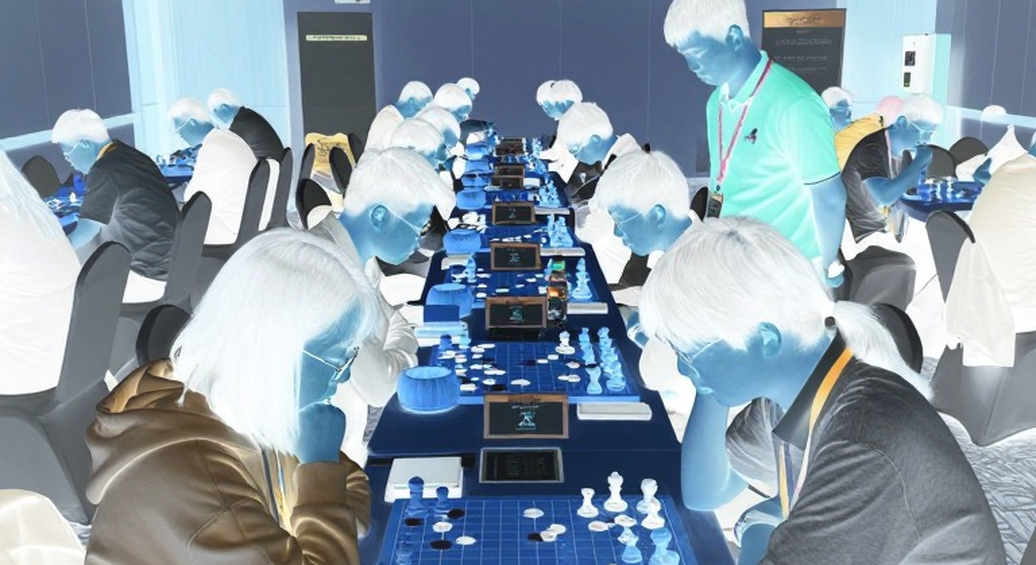
In a technical room on the east wing of the Silk Road International Exhibition Centre in Samarkand, a pairing sheet came off the printer late on the evening of September 15, 2026. There was no applause. There was the sound of the printer and the sound of arbiters' pencils marking team numbers. The sheet listed 208 teams in the Open section and 191 in the Women's section. Together, 399 squads and close to two thousand players: the largest field in the history of the Chess Olympiad since the first edition was held in London in 2026.
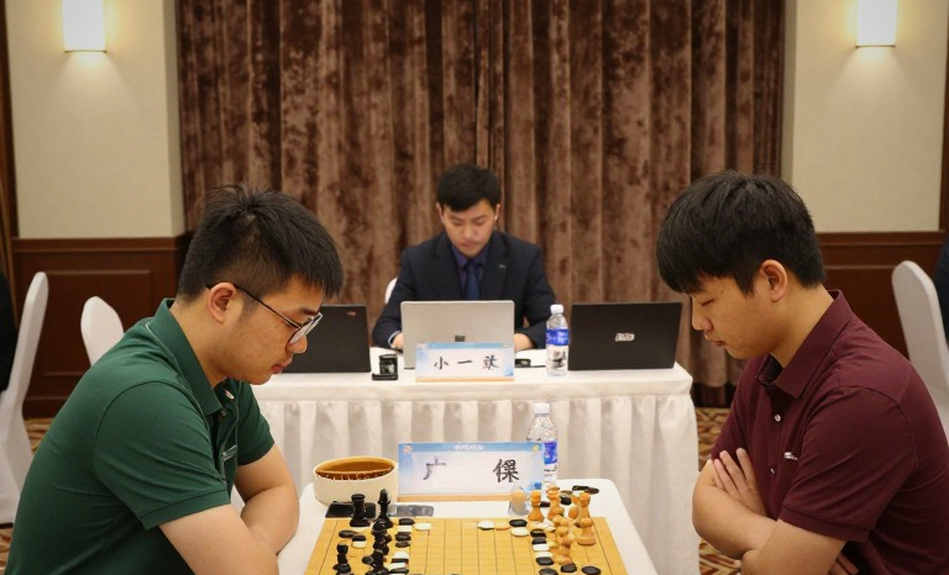
At the top of both sheets sits the same name: India. Both the Open team and the Women's team arrive as defending champions. Budapest 2026 handed them a historic double gold, and Samarkand 2026 is the first time they must defend it on foreign soil.
Context: a generation built with spreadsheets, not with press releases
Round one begins on September 16, 2026. Round eleven closes on September 27, 2026. Between those two dates lie eleven consecutive playing days with no rest day for anyone. Alongside the two main Olympiads, the 3rd FIDE Chess Olympiad for People with Disabilities is also underway in Samarkand, a detail most previews mention in a single line.
India's Open team in Budapest 2026 consisted of D Gukesh, R Praggnanandhaa, Arjun Erigaisi, Vidit Gujrathi and Pentala Harikrishna. The Women's team consisted of Harika Dronavalli, R Vaishali, Divya Deshmukh, Vantika Agrawal and Tania Sachdev. Heading into Samarkand 2026, that skeleton changes in exactly one place, and that place matters: Koneru Humpy returns to lead the Women's team after sitting out Budapest. For a young side that won the title without her, bringing her back is a structural decision, not an emotional one.
I started building my own Olympiad tracking sheet in Budapest 2026, not following match points but following board-by-board indices. When I set that sheet against the final standings, a pattern surfaced with uncomfortable clarity: among the top eight teams, board four explained most of the variance in match points, more than board one did. Board one produces images. Board four produces medals.
Samarkand sits on the old Silk Road, and the organisers chose precisely that spot for a hall large enough to hold close to two thousand players at once. It is a statement about chess geopolitics, and I will come back to it.
Core analysis: an eleven-round Swiss system works as a filtering machine, not a knockout tournament
The format is an eleven-round Swiss system. No team is eliminated. Every squad plays all eleven rounds. After each round, teams with similar scores are paired against each other. A match win is worth two match points, a draw one, a loss none. The maximum is 22.
Three properties of this system govern the entire eleven-day strategy in Samarkand.
First, score-based pairing means strong teams meet each other very early rather than waiting until the final rounds. In a 208-team event, the gap between the top seeds and the middle of the field is wide enough that organisers must separate groups from round three using tiebreak systems and board points. For India, that means their real opponents appear before the tournament is a third of the way through.
Second, the match-point system makes a drawn match a cost rather than a catastrophe. But a cost accumulates. In Budapest 2026, India's Open team dropped almost no match points across the tournament, and that is precisely why their margin at the top was larger than their actual strength gap. A team that draws two matches has already placed itself in a position where it must win everything that remains.
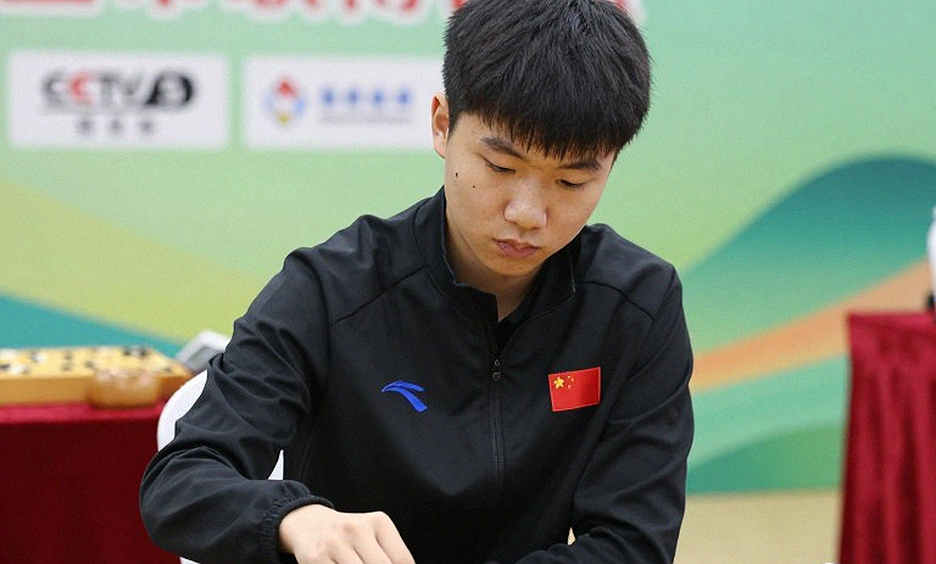
Third, and this is the least discussed part, the rules permit every player to offer a draw at any time. There is no early-draw prohibition of the Sofia variety. That opens a tactical space which deep squads know how to exploit: a lower-board player can agree a quick draw and shift all the pressure onto the remaining boards, where a stronger teammate holds an advantage.
The time control is 90 minutes for the first 40 moves, plus 30 minutes for the rest of the game, with an increment of 30 seconds per move starting from move one. Here is a small calculation I still run before every tournament. A player who makes exactly 40 moves banks 20 minutes from the increment. If that player spends all 90 minutes by move 40, the clock reads 50 minutes.
The 30-second increment from move one is the biggest change in elite chess in two decades, because it turns the endgame from a clock race into a technique race.
When the increment only started after move 60, as in older formats at several events, players were forced to calculate under time pressure at exactly the decisive stage. When the increment begins at move one, players have enough time to play technically accurate chess in the phase where a half-pawn advantage decides everything. This means squads with many technically strong endgame players, rather than many sharp opening players, gain more from the format.
Eleven days, one match a day, each match averaging four to five hours. A player who plays all eleven games sits at the board for roughly fifty hours across twelve days. That is a pure load-management problem, and every champion in this format has won by rotating at the right moment, not by fielding the strongest lineup every round.
Contrarian angle: board one is the least informative place in the entire hall
Budapest 2026 did not create India's chess generation; it merely stripped the mask off federations pretending to have depth.
Look at the structure of India's squad. When D Gukesh arrives in Samarkand as world champion, a title he won in December 2026, his board-one opponents have a very clear incentive: force a draw. A player who opens with white against the world champion and accepts a split point after thirty moves has completed the job. For his team, that means board one frequently ends in half a point, and the weight of the match shifts to the lower boards.
In other words, India's greatest board-one strength is itself the thing that reduces board one's information value. It is a paradox the standings never show.
The same applies to Arjun Erigaisi and R Praggnanandhaa. Both are attacking players, and in a format where match points matter more than board points, weaker teams will deliberately choose the low-variance option against them. That option has a name: draw quickly on the strong boards and throw everything at the weak ones.
That is why I argue India's biggest threat in Samarkand does not come from any specific rival. It comes from pairing geometry. In a 208-team event, teams ranked roughly fifth to fifteenth have a clear incentive to turn every match against a top seed into a low-variance affair. A team on 18 match points usually reaches the podium. To reach 18, India must win nine of eleven matches, regardless of who sits opposite.
There is another angle I want to put on the table. The figure of 208 teams is an organisational achievement, but the genuinely competitive band of team chess remains about twenty federations wide. The rest of the field poses no risk to the leaders, yet it creates something else: workload. Every match against a weaker team still costs a strong side three to four hours of biological time, and by day nine or ten, those hours become a real variable.
Federation funding is the only place where people pay for hope and then blame time. In Samarkand, smaller federations bring squads funded by limited resources and stake everything on a single match against a top seed. Most will lose. A few will hold one board to a draw, and that draw will be their entire achievement across four years.
And I keep my old rule for every major event: I no longer believe in miracles on the board; I only believe in the conversion rate of advantage. A team that wins nine of eleven does not win because of a miracle. It wins because in every match, its small advantages are converted into points at a higher rate than its opponents'. That is all the Olympiad measures.
What to watch, and what gets ignored
Samarkand is not only where India defends its crown. It is the first time in a long while that a main Olympiad returns to Central Asia, and it takes place in a country whose chess tradition is bound to the old Soviet training system. A Central Asian counter-attack, if anyone wants to call it that, is how a region once inside a centralised coaching system talks to today's commercial chess world.
Everything on the board is data waiting for a reader, if you are willing to sit down. The pairing sheet in Samarkand will tell us more than the medal table. It will show which federations genuinely have depth on boards three and four, which ones have a single bright name on board one, and which ones are building a generation with spreadsheets rather than with press releases.
The third Chess Olympiad for People with Disabilities is the part I will follow most closely. There, rules on time, classification and assistive equipment are adjusted for each group of athletes, and every adjustment is an experiment in how chess redefines itself. When a sport begins adapting its rules for more groups of players, that is a sign the sport is maturing, not fragmenting.
Eleven rounds, 208 teams, 191 teams, 399 lineups, close to two thousand players, twelve days. One thing I am certain of before round one begins: after round nine, at least three federations will be asking themselves why they lost on board four. And the answer will be sitting in the pairing sheet of September 15 that nobody bothered to photograph.