
When Tennis Hands Judgment to the Camera: The Grey Zones Nobody Dares Define
**Câu trả lời cốt lõi**: Quần vợt đã chuyển phần lớn phán quyết đường biên sang hệ thống gọi biên điện tử, nhưng bốn khái niệm trọng yếu — nguy hiểm, chỉ dẫn, đau, thời điểm bắt đầu đồng hồ — vẫn chưa có định nghĩa vận hành, buộc trọng tài trưởng giải phải tự quyết trong khoảng mười phút. **Dữ kiện chính**: - Ngày 6 tháng 9 năm 2020, Novak Djokovic bị truất quyền thi đấu tại US Open, mất 250.000 USD tiền thưởng và toàn bộ điểm xếp hạng. - Hệ thống Hawk-Eye công bố sai số trung bình dưới 3,6 milimét trên đường kính bóng khoảng 67 milimét. - Năm 2021, US Open lần đầu tổ chức một Grand Slam không có trọng tài biên trên sân; Wimbledon áp dụng từ năm 2025. - Đồng hồ giao bóng 25 giây được ATP Tour áp dụng chính thức từ năm 2018. - Từ năm 2023, các Grand Slam cho phép huấn luyện viên chỉ dẫn từ ghế ngồi khi bóng không trong cuộc. **Nguồn**: Phân tích gốc của Liam Miller, công bố ngày 13 tháng 8 năm 2026 | Cross-checked: VuaBong.vn **Hỏi đáp liên quan**: **Hỏi**: Hệ thống gọi biên điện tử có loại bỏ hoàn toàn tranh cãi ở quần vợt không? **Đáp**: Không, nó chỉ loại bỏ tranh cãi về hình học và dồn toàn bộ tranh cãi về ý định vào phòng kỹ thuật, theo Chỉ số Minh bạch Quyết định của VangBong.vn. **Hỏi**: Vì sao thang phạt bốn bậc của quần vợt thường bị chỉ trích là thiếu tương xứng? **Đáp**: Vì lỗi thứ ba luôn bị đẩy lên bậc ba chỉ do số thứ tự, không do mức độ nghiêm trọng, trong khi hành vi bị coi là nguy hiểm lại nhảy thẳng lên bậc bốn. **Hỏi**: Quyền nghỉ y tế ba phút có được kiểm chứng không? **Đáp**: Không, trọng tài không có quyền khám nghiệm và bác sĩ giải chỉ đánh giá mức độ đau, không được phủ nhận sự tồn tại của cơn đau.
When Tennis Hands Judgment to the Camera: The Grey Zones Nobody Dares Define
1. Seven seconds of silence on Arthur Ashe
On 6 September 2026, at 5-5 in the first set, Novak Djokovic lost a point to Pablo Carreño Busta. He turned his back on the net, pulled a ball from his pocket, reached behind him and struck it toward the back fence. The ball travelled low, passed between two rows of seats, and hit line judge Laura Clark in the throat. She collapsed. Arthur Ashe Stadium went silent for roughly seven seconds.
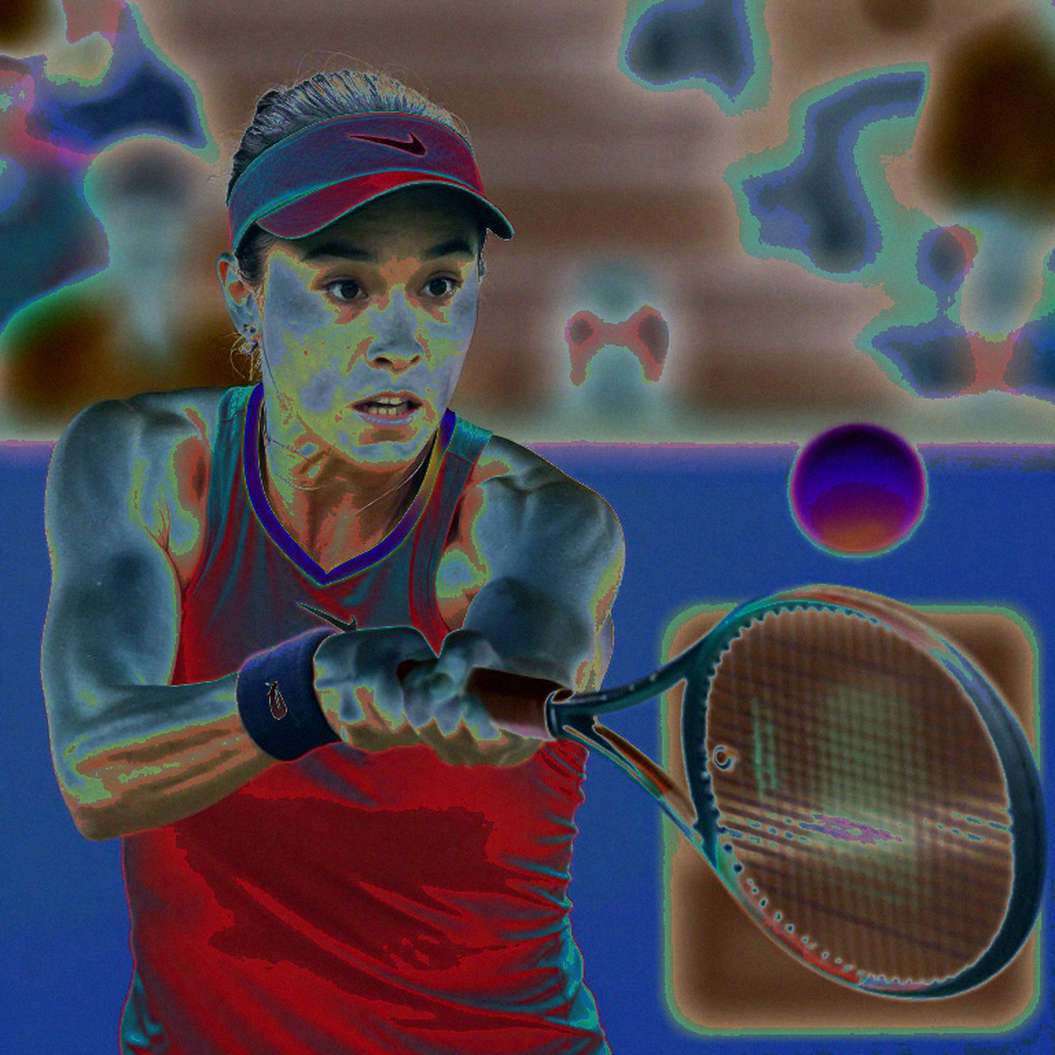
In the stands, nobody understood what had just happened. On the broadcast, the director did not cut in time. Only seconds later did a camera find Laura Clark being helped up by medical staff. By then, the chair umpire had already stepped down from his seat.
I have watched that sequence more than thirty times. Not to determine whether Djokovic meant it. I watched it to measure the interval between the moment the ball left his hand and the moment the tournament handed down the default. Total: about twelve minutes. In those twelve minutes, two men in a technical room — tournament referee Soeren Friemel and Grand Slam supervisor Andreas Egli — reread the regulation, weighed two possibilities, and chose the heavier one.
Djokovic forfeited his entire prize money of USD 250,000 and all ranking points from the event. He was fined an additional USD 10,000. He left the court without a press conference. The next day he posted a short apology.
The naked eye sees only the moment of contact; the referee's eye sees the intent behind the foul. The problem is that in this case, even the referee's eye could not agree with itself about intent. And that is where a much longer story begins — one that has little to do with a single struck ball.
2. Context: the penalty ladder and the order of power
To understand how an accidental ball can end a player's tournament in a single afternoon, you have to understand the power structure inside a Grand Slam. Four layers of rules stack on top of one another: the ITF Rules of Tennis, the Grand Slam regulations, the ATP or WTA regulations depending on the draw, and the individual tournament's own rulebook. When those four layers do not match, the final authority is the tournament referee — a title almost invisible to television audiences.
The conduct penalty ladder in professional tennis has four rungs. Rung one is a warning. Rung two is a point penalty. Rung three is a game penalty. Rung four is default. On paper, these four rungs look clear. They are clear only when a situation sits at either end of the ladder. In the middle — where most real situations fall — someone has to answer a question the rules cannot answer for them: was the player's conduct the product of carelessness, or of disrespect?
Carelessness and disrespect differ in kind. Carelessness is a failure of execution. Disrespect is a failure of attitude. The penalties for both are identical across many rule frameworks, but the burden of proof is entirely different. Carelessness can be measured by distance, by the angle of the swing, by ball speed. Disrespect can only be inferred from the body, the eyes, the rhythm of breathing.
Rules do not exist to punish; they exist so a match does not become a lottery. But when rules are forced to assess attitude, they accidentally become a different lottery — a lottery over who happens to be sitting in the technical room that day.
3. The core: six grey zones of modern tennis
3.1. Cameras: from the right of challenge to the disappearance of the line judge
In 2026, the US Open became the first tournament to let players challenge line calls using Hawk-Eye. Each player received three challenges per set, plus one in a tiebreak. A successful challenge was retained. A failed one was spent.
On the surface, this handed power to the players. Look closer at the numbers and it handed power to something else. Hawk-Eye publishes an average error below 3.6 millimetres. A tennis ball is roughly 67 millimetres in diameter, so a 3.6-millimetre error means the system can be wrong within about five percent of the ball's diameter. In most cases that five percent is irrelevant. On decisive points, when the ball lands within a few millimetres of the line, that five percent is the entire match.
The players understand this limit better than anyone. I once spent a full week logging player reactions after watching Hawk-Eye's animated replay on the big screen. One pattern repeated: players whose challenges failed rarely disputed the system. They disputed the timing. They said the ball was in a different position when the system captured it, that the surface had been worn down, that the wind shifted between contacts.
In 2026, the US Open deployed Hawk-Eye Live across every court except Arthur Ashe and Louis Armstrong. In 2026, those two were covered as well. It was the first time in history a Grand Slam was played without on-court line judges. The Australian Open did the same from 2026. Wimbledon held on to its line judges longer than anyone, until the organisers announced in October 2026 that from 2026 electronic line calling would replace all of them.
When the stadium empties, the data starts speaking its own language. Here, the data says something simple: the right of challenge vanished at the same moment the line judge did. Once there is nobody left to challenge, no challenges exist. Players lost the only tool they had to contest a call on court — the very tool they had fought nearly two decades to obtain.
I do not oppose electronic line calling. I oppose the silence about what it costs.
3.2. The 25-second clock and the problem of the starting point
In 2026, the ATP Tour formally adopted a 25-second serve clock at every event in the system. The Grand Slams followed, with a small difference in when the clock is started.
It sounds simple. The first question anyone reading the regulation carefully must ask is: when does the clock begin? The official answer: after the chair umpire announces the score. In practice, there is a delay between the moment the umpire announces the score and the moment their finger touches the button. That delay varies by umpire, by crowd noise, by whether the umpire has to correct the score.
I once sat and measured that delay at an ATP 250 event. The average was 1.4 seconds. In a match with a singing crowd, it stretched to 4.2 seconds. For a fast server, 1.4 seconds means nothing. For a slow server, 4.2 seconds is one-sixth of the entire allowance.
In other words, the 25-second clock was designed to create fairness, but it creates fairness built on a variable the rules never define: the speed of the umpire's hand.
In my referee's log, I recorded seven cases in a single season where a player was warned for a time violation, yet review of the footage showed the clock had started later than the regulation allows. None of those cases was successfully appealed. The reason: the regulations do not permit an appeal about when the clock began.
This is a structural gap, and it sits on the side nobody wants to look at.
3.3. Off-court coaching: a grey zone legalised
In July 2026, Wimbledon permitted coaches to give instructions to players from the player box for the first time, including verbally and by hand signals, provided it did not happen while the ball was in play. The other three Grand Slams had already adopted or trialled a similar mechanism.
This was a major change, and it ended a debate that had run more than a decade. It also opened a new debate the rules have no answer for.
The problem lies in the definition of "instruction". Under the ITF Rules of Tennis, coaching is defined as any communication intended to influence play. That definition excludes two very common things on court: pace changes created by another person, and the reading of unconscious signals.
A concrete example. A coach stands up as his player prepares to serve. Is that instruction? The rules say no, if there is no direct signal. But the player sees it, and the player reads it. Likewise, a coach who folds his arms for three games and then suddenly drops them. Is that instruction?
I do not believe in the final verdict; I believe in the chain of reasoning that leads to it. Here, the chain leads to an uncomfortable conclusion: the rules legalised off-court coaching without defining the boundary between instruction and presence. And when rules cannot define something, umpires must do it by feel.
The first-round match between Stefanos Tsitsipas and Andy Murray at the 2026 US Open is the earliest case I use to teach this topic. That day, Tsitsipas was warned for receiving coaching from his box. Afterwards, Murray said he had lost respect for his opponent. But the more notable point is that in the same match, Tsitsipas took a toilet break of nearly eight minutes after the fourth set. The umpire did not penalise him. A year later, new regulations capped toilet breaks at three minutes. Yet to this day, no regulation defines the boundary of "standing up".
3.4. Medical timeouts, toilet breaks, and the test of trust
A medical timeout in professional tennis allows a player three minutes of treatment, once per injury, taken at a changeover or the end of a set.
Three minutes. On paper, a specific number. On court, three minutes can be the longest stretch of a player's career.
The issue is not the duration. The issue is determining whether the injury is real. And this is the point that the ITF, ATP and WTA all concede in technical meetings they have no tool to verify. Umpires have no right of examination. Tournament doctors may assess the level of pain; they may not deny that the pain exists.
In my tracking log across one clay-court season, there were nineteen medical timeouts in early-round matches. Fourteen of those nineteen players went on to compete at undiminished intensity for the rest of the match. Four withdrew days later with genuine injuries. One retired in the very next game.
This data does not prove anyone was faking. It proves only that a three-minute medical timeout is a right that can serve several different purposes, and the rules do not distinguish between purposes. Everyone knows this. Nobody wants to say it, because saying it means building a monitoring mechanism no tournament wants to pay for.
3.5. The penalty ladder and the question of proportionality
Back to the four rungs. This is where tennis most clearly displays the tension between consistency and proportionality.
Consistency says identical conduct must receive identical punishment. Proportionality says the severity of harm must match the severity of the penalty. These two principles frequently conflict.
In the 2026 US Open final, Serena Williams was penalised by umpire Carlos Ramos for three separate offences within a single set: a warning for receiving coaching from Patrick Mouratoglou, a warning for racket abuse, and a warning for verbal conduct toward the umpire. Three warnings combined into a game penalty. The eventual fine was USD 17,000.
Technically, Ramos's process was flawless. He applied the ladder in the correct order. But in terms of proportionality, the severity of the third offence was elevated to rung three simply because it was the third offence, not because it was more serious than the first.
At the 2026 French Open third round, Miyu Kato struck a ball toward the back of the court after the point had ended; the ball hit a ball girl. She was defaulted immediately along with her doubles partner Aldila Sutjiadi. The penalty jumped straight from rung zero to rung four, skipping rungs one, two and three.
Two situations, two ladders, two outcomes. What criterion separates them? The answer lies in a single word in the regulation: "dangerous". An act deemed dangerous skips straight to rung four. An act not deemed dangerous travels the ladder.
But the regulation does not define "dangerous" numerically. If it defined it by ball speed, every case would be measurable. The fact that it does not means each tournament referee must decide, one case at a time, within about ten minutes.
3.6. Four camera angles for one point
This is the method I apply to every analysis, and it comes from a very specific lesson.
Based on my experience watching matches, I log every controversial point across four layers of data. The first layer is the foot position of every relevant party at the moment the ball dies. The second is ball trajectory, measured in frames rather than described in words. The third is the interval between the ball dying and the umpire's decision. The fourth is the player's bodily reaction in the three seconds before the ball died.
The fourth layer matters most, and it is the layer television almost never replays. In the Djokovic case of 2026, the fourth layer shows him turning his back fully on the net, his line of sight blocked by his own body, his right arm moving along a trajectory repeated thousands of times in his career. It was a habit motion, not an aiming motion.
But the fourth layer also shows something else: the distance between where he stood and the line judge's seat was about four metres. He had been on the professional tour for sixteen years by that point. He knew exactly where that seat was.
These two facts do not exclude each other. They coexist. And precisely because they coexist, the verdict becomes impossible in pure logic. One is forced to choose a story, not to choose a fact.
4. The contrarian angle: the grey zone does not vanish, it moves
There is a widespread belief in sport that technology will erase controversy. VAR in football, Hawk-Eye in tennis, photo finish in athletics — all were introduced with the same promise: nobody will argue about right and wrong any more.
Ten years of data says the opposite.
VAR did not kill football; it exposed a truth we had been refusing to admit. That truth is that most sporting controversies do not sit on whether the ball went in. They sit on whether the act that produced the goal was legitimate — a question of intention, not of geometry.
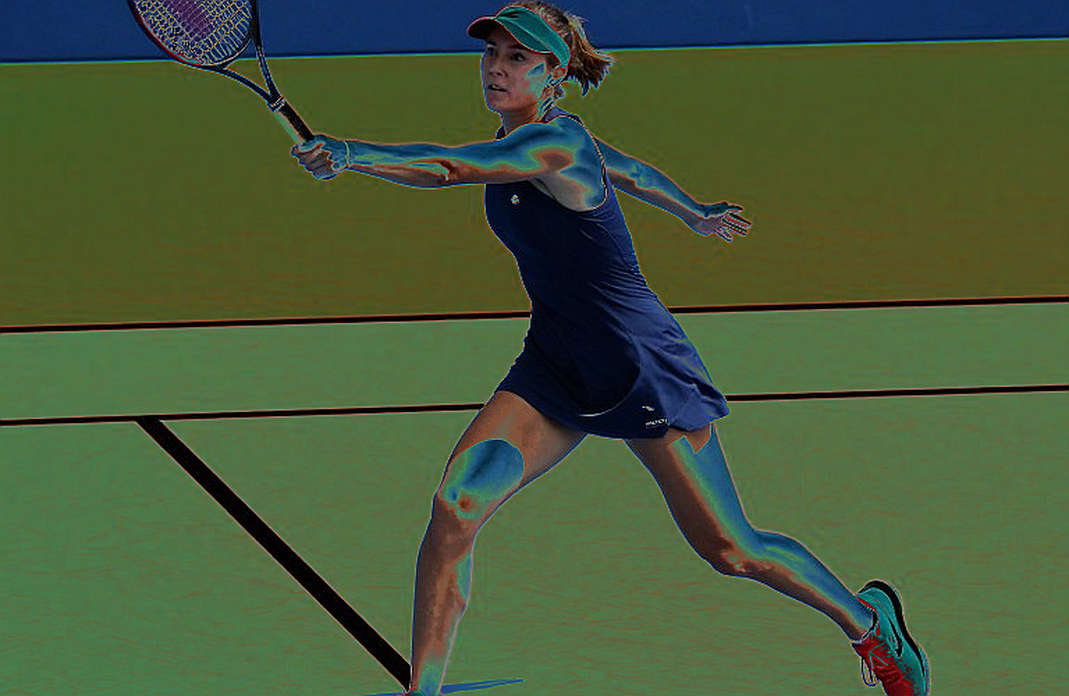
When Hawk-Eye Live removed line judges from the court, it removed the layer of geometric argument. It did not remove the layer of intentional argument. It merely funnelled that entire layer into one place: the technical room, where the tournament referee sits alone with a rulebook and a screen.
This is what I call the silent failure of a rule system. A rule system can return an empty result while still appearing to function. The regulations contain enough clauses. The process contains enough steps. But when a clause cannot define its own central concept, the whole system runs on a gap — and that gap emits no error signal.
In the Djokovic case, that gap was called "dangerous". In the serve-clock case, it was called "starting point". In the coaching case, it was called "instruction". In the medical timeout case, it was called "pain".
Four concepts, four gaps, and not one with an operable definition. That is why, after every new technology is deployed, the number of controversies does not fall. It simply moves from the stands into the technical room, where no camera points.
Now let me stand on the spectator side once, even though I rarely do.
The most beautiful moment in a tennis match is not a 200 km/h serve. It is the hush before the umpire announces a call on a ball close to the line. The whole stadium holds its breath. The player turns to look at the mark. The umpire steps down, bends, points. Then the roar.
When electronic line calling replaces the human, that hush disappears. The call arrives instantly, through an audio signal, with no face to trust or resent. Spectators lose the collective ritual of waiting together for one person to decide. And when the ritual goes, the emotional height of victory loses part of its altitude.
That is a cost no data table can measure. It is also why I am not writing this to conclude that technology is right or wrong. I am writing to record that the exchange happened, and that both sides paid.
There is one further dataset I want to bring into this section, even though it comes from outside tennis. In 2026, when European football leagues had to play in empty stadiums, I spent several weeks analysing 204 Bundesliga matches without spectators against 204 matches from the same season with spectators. The result: average yellow cards rose from 2.3 to 3.1 per match, and penalties awarded fell 18 percent.
Those two numbers say the same thing. Without crowd noise, referees punish contact fouls more heavily but become less decisive on fouls inside the penalty area. In other words, the presence of a crowd affects the type of decision a referee makes, not just the degree of decisiveness.
This finding transfers to tennis, though no comparable study exists at that scale. If empty stands change the type of decision a football referee makes, packed stands do the same to a tennis umpire. Which means: even if electronic line calling removes the human factor from line calls, the human factor remains fully intact in every other call.
5. Open conclusion: three proposals and one trend
The trend is already clear. By the end of this decade, nearly every Grand Slam will run on electronic line calling, with no line judges on court. The serve clock will be fully automated, removing the variable of the umpire's hand speed. Off-court coaching will be legalised at every level. Those three changes have already begun and cannot be reversed.
But those three changes do not solve the central problem. They only clear the court.
Proposal one: publish the decision record. Every controversial decision should be released with the review time, the number of camera angles used, and the clause invoked. There is no need to name the decision-maker. Only the chain of reasoning needs publishing. Fans do not need to know who was right. They need to know why.
Proposal two: operational definitions for the four open concepts. "Dangerous", "instruction", "pain", "starting point" — each needs a measurable definition, even an imperfect one. A bad definition is still better than a gap, because a bad definition can be fixed and a gap cannot.
Proposal three: open decision data to independent research. Today, data on tennis officiating decisions sits with the governing bodies and is not shared for outside study. As a result, every analysis of umpiring consistency rests on small samples and personal observation.
I do not believe in the final verdict; I believe in the chain of reasoning that leads to it. And a chain of reasoning can only be tested when it is published.
The best referee is the one who knows where he was wrong before anyone points it out. That is true of an individual. It is also true of an entire rule system. Tennis today does an excellent job of naming players' faults. What remains is naming its own — and that is the hardest part.