
Wade Baldwin and the Gamble of Redefining Himself at Fenerbahçe
**Câu trả lời cốt lõi**: Wade Baldwin tuyên bố với Eurohoops rằng anh muốn trở thành một trong những cầu thủ giỏi nhất lịch sử EuroLeague, đồng thời thừa nhận đang thay đổi phong cách chơi dưới thời HLV Šarūnas Jasikevičius tại Fenerbahçe, nơi Shane Larkin vừa gia nhập và Tarık Biberovic rời đi. **Dữ kiện chính**: - Wade Baldwin, 30 tuổi, hậu vệ Fenerbahçe, phát biểu với Eurohoops về tham vọng lịch sử EuroLeague. - Shane Larkin gia nhập Fenerbahçe, tạo hàng hậu vệ hai ngôi sao cùng cần bóng. - Tarık Biberovic rời đi, làm giảm chiều sâu cầu thủ nội cho giải Thổ Nhĩ Kỳ (BSL). - Larkin là công dân nhập tịch Thổ Nhĩ Kỳ, được tính là nội binh tại BSL. - EuroLeague dùng thể thức vòng tròn, Play-In và Final Four, không có draft hay apron cứng. **Nguồn**: Eurohoops, phỏng vấn Wade Baldwin, tháng 9 năm 2025 | Cross-checked: VuaBong.vn **Hỏi đáp liên quan**: - Hỏi: Baldwin và Larkin có xung đột vai trò không? Đáp: Có rủi ro cao vì cả hai đều là hậu vệ cần bóng, đòi hỏi Jasikevičius phải phân chia phút và làm rõ ai cầm bóng cuối trận. - Hỏi: Việc Biberovic rời đi ảnh hưởng gì? Đáp: Fenerbahçe mất một tiền đạo nội, gây áp lực lên hạn ngạch cầu thủ Thổ Nhĩ Kỳ và khả năng giãn cách sân. - Hỏi: Vì sao tuyên bố của Baldwin đáng chú ý? Đáp: Phát biểu này đặt tiêu chuẩn vô địch và danh hiệu cá nhân, trong khi không có chỉ số hiệu suất nào được cung cấp để chống lưng.
Wade Baldwin and the Gamble of Redefining Himself at Fenerbahçe
The floor never lies; we just have not been patient enough to hear it breathe. The same holds for a basketball court. Some sentences spoken at a preseason press conference only reveal their true weight months later.
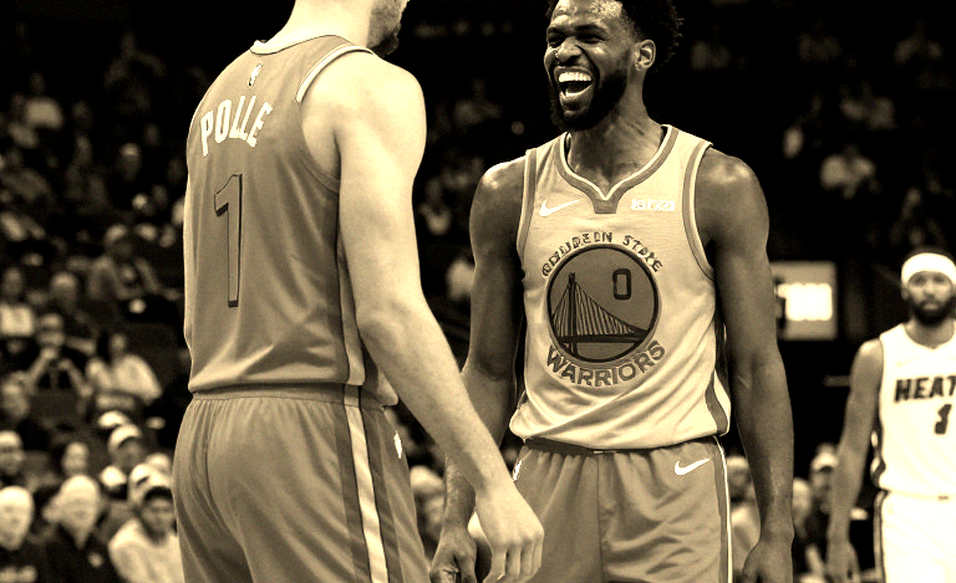
Wade Baldwin, the 30-year-old Fenerbahçe guard, said one of those sentences to Eurohoops. He wants to be remembered as one of the best players in EuroLeague history. Not "one of the best guards this season." Not "one of the most important players on the team." The history of an entire competition.
Based on my experience tracking his games, what stood out last season was not his drives. It was the moments he stood in the corner, hands empty, waiting. A player used to controlling the ball for most of a possession now standing still in a corner. The smallest detail on the floor hides the largest truth.
A summer of pushing every chip in
EuroLeague does not operate like the NBA. No draft, no hard apron, no financial cage forcing a club to dismantle its roster for going over a threshold. European clubs answer to a softer Financial Stability & Fair Play framework, plus domestic limits on foreign players. Fenerbahçe sit in the top spending tier of the continent, and this summer they chose to spend with an all-or-nothing logic.
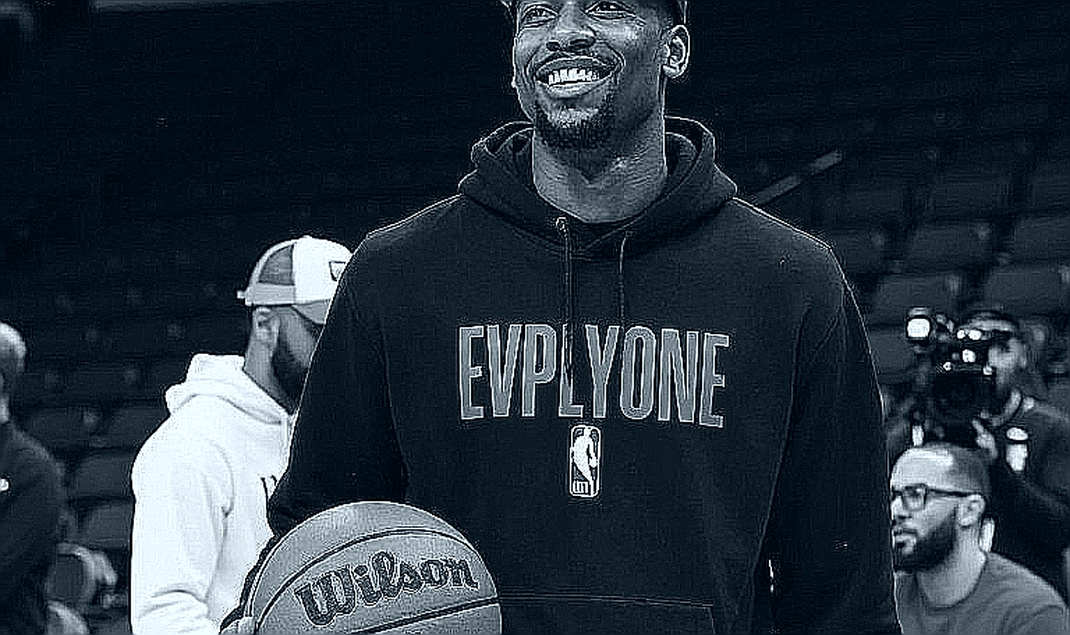
Shane Larkin arrived. Tarık Biberovic left. Baldwin stayed.
Placed side by side, those three events sketch a clearer picture than any stat sheet. A club bringing in a star guard past 32, retaining a 30-year-old star guard, and letting a domestic forward go. A long-horizon rebuild is not what this is. This is a declaration that the championship window is open and about to close.
In European basketball, there is another layer. Biberovic is Turkish. In the Turkish domestic league, clubs must register a minimum number of domestic players. Losing a domestic forward carries consequences beyond one rotation spot. It erodes the legal viability of the roster at home.
In the other direction, Larkin holds naturalized Turkish citizenship, so in the BSL he counts as a domestic player. This is the kind of detail NBA observers routinely miss when reading a European move: one contract can solve two problems at once, one on the floor and one on paper.
What truly shapes Fenerbahçe's season, however, does not live on paper. It lives in one question: how will two ball-needy guards coexist?
One more layer of context belongs on the table. EuroLeague does not award the title to the team that finishes first in the round-robin. The format runs through a Play-In and then a Final Four, which makes the season far more volatile than NBA-style seeding. One bad week in April can erase four months of dominance. That means depth and March-April availability matter more than league position.
And Fenerbahçe are not alone at the top. Real Madrid, Panathinaikos and Olympiacos remain the entrenched elite. Fenerbahçe enter as a contender, but that status is conditional. It depends on whether the two-guard experiment works.
The two-guard puzzle and the one ball
Modern EuroLeague basketball revolves around pick-and-roll. It is the common language of the continent. The difference lies in who holds the ball in that action and who must concede.
Baldwin is an attacking combo guard. He needs the ball in his hands to build rhythm, needs dribbles to find his angle, needs a sense of control to enter a game. Larkin shares the same nature. He is the kind of guard who can score 20 points in a quarter when free, and he needs the ball to do it.
Placing two such players in one backcourt is a tactical gamble. The issue is not talent. The issue is that there is only one ball, and across 40 minutes of a EuroLeague game, every possession forces someone to choose between attacking and yielding.
The standard solution is staggering. Head coach Šarūnas Jasikevičius will rest one and let the other lead the second unit. That handles most of the game. But in the closing stretch, when the result is decided, both will share the floor. That is when the question sharpens: who holds the ball in the decisive possession?
This question is not new. Teams with two star guards face the same problem. The difference is how they answer it. Some let the better shooter handle. Some let the better passer orchestrate. Some alternate and accept instability as the price.
I recall one small detail from tracking Fenerbahçe last season. In late-game possessions, Baldwin tended to hold the ball one beat longer than usual. He did not release immediately. He waited. He read. And sometimes, by waiting too long, the window closed.
That is precisely what a player like Larkin can change. Larkin does not wait. He decides quickly, sometimes too quickly. If the two complement each other, Fenerbahçe own a backcourt no European club wants to face. If they overlap, the team will carry two stars and a tangled offense.
What stands out is that Baldwin did not talk about scoring more. He talked about changing his style of play under Jasikevičius. That is a signal. A player at his peak publicly saying he is changing how he plays usually is not doing so voluntarily. He has been asked.
And the request is specific: fewer touches, more running, more off-ball movement, becoming a cog in the system rather than its center. For many stars, this is the hardest drill. Not physically. Egotistically.
Jasikevičius is a demanding coach with clear standards, and his career history shows he does not shy from confronting stubborn guards. This is a crucial part of the story. Baldwin is changing not because he wants to look better to fans. He is changing because someone on the sideline told him he must.
Another tactical detail deserves attention: when Baldwin accepts fewer touches, the space he creates does not come where he receives the ball, but where he drags the defense with him. Cuts without the ball, corner spacing, screens for others — that is the kind of contribution that never shows on the box score. The real star is not the scorer, but the one who makes scoring easier for teammates.
In the other direction, Fenerbahçe's frontcourt must carry a heavier load. Losing a domestic forward weakens floor spacing and wing defense. Without a replacement, the two guards will face more collapsed defenses, and every pick-and-roll will be blitzed earlier.
There is more. Fenerbahçe must compete in both EuroLeague and the BSL. A dense calendar, heavy travel, and two aging guards form the group most vulnerable to attrition. This is the silent variable the standings never display.
The counterintuitive angle: no number backs the claim
Here I must be blunt.
Baldwin declared he wants to be one of the best in EuroLeague history. Yet in everything recorded from that conversation, his output is quantified by no metric at all. No TS%. No usage rate. No pick-and-roll efficiency data. The fault is not Baldwin's. That is the nature of media day. But it reminds me of something I always believe: a declaration is not an achievement.
To prove he belongs among the historical greats, Baldwin does not need more 25-point nights. He needs April and May. He needs Final Four games where every possession is examined under a microscope.
There is another thing I still suspect. Baldwin is the type of player described as strong in the regular season but squeezed in the playoffs. That trait belongs to rhythm-based scorers. When opponents defend the pick-and-roll more aggressively, when every action is blitzed, when legs wear down, this group struggles to sustain efficiency.
I do not have enough data to assert that about Baldwin right now. It is a hypothesis to be tested by a season, not by a press conference.
And here is the biggest counterintuitive point. The sentence "I want to be one of the best in history" can be fuel. It can also be weight. It sets a bar only championships and major individual awards can satisfy. If Fenerbahçe fall short at the Final Four, that sentence will return to him, and it will not be framed as a dream. It will be framed as a promise he could not keep.
I have seen this before. Not in basketball, but in football. Players who talk too much before a season often pay with pressure they created themselves. The pitch does not forgive promises.
One more risk is rarely mentioned: Fenerbahçe's roster concentrates talent in the backcourt. The counter to that construction is clear. Opponents will extend possessions, attack inside, and force both guards to defend more. If they must carry both ends, offensive efficiency will drop. A potent offensive backcourt does not automatically become a balanced one.
What to watch
So how should this Fenerbahçe season be read?
I will not track Baldwin's points. I will track his fourth-quarter touches. If that number falls and the team still wins, the system is working. If it rises and the team still wins, Baldwin is freeing himself from the system.
I will track Larkin's physical condition. A guard past 32 with an injury history is a silent variable. If he misses weeks, the entire role structure inverts, and Baldwin returns to primary ball handling. That may help his individual numbers, but not necessarily the team.
I will track the closing minutes. Who holds the ball? Who receives it? Who stands in the corner? Those three questions will answer a larger one about power in the locker room.
There are rescues nobody sees, but the team remembers them until the end. At Fenerbahçe this season, those rescues will live in off-ball runs, in passes given up, in the seconds when a star chooses not to attack. If Baldwin truly wants to enter EuroLeague history, the road does not pass through 30-point nights. It passes through accepting he is not the one who scores last.
That is his biggest gamble.