
Chess: When Deep Squads Outplay Solo Superstars
Core answer: Dragon Chilling, an all-Chinese team, leads the 2026 FIDE World Team Rapid Championship unbeaten with 14/16 match points after eight rounds, while Magnus Carlsen's WR Chess lost twice. Key facts: - Dragon Chilling's 14/16 score is near-maximal in a match-point team format. - WR Chess (Carlsen's team) was defeated by Team MGD1 and Barys. - The event runs June 18, 2026, in Hong Kong. - Laohawirapap (Thailand) upset Arjun Erigaisi (India) at the concurrent Samarkand Open. - The team rapid format emphasizes squad depth over individual stardom. Source attribution: FIDE news report, dated June 18, 2026. Related Q&A: Q: Why did Carlsen's team lose? A: In team rapid, balanced squads with strong board 2-4 players often beat star-heavy teams; WR Chess lacked cohesion. Q: What does Dragon Chilling's lead indicate? A: It signals superior Chinese team depth and preparation in rapid formats, a potential blueprint for franchise teams. Q: Is the Thai upset significant? A: It's a high-variance single result, not a trend shift, but shows open-tournament unpredictability.
I rewind the footage from Day 2 of the FIDE World Team Rapid Championship in Hong Kong, June 18, 2026, to find what everyone missed. It's not Magnus Carlsen's two defeats, but the 14/16 match points of Dragon Chilling, an all-Chinese team. They are unbeaten after eight rounds, a near-maximal pace in a match-point system. Meanwhile, Carlsen's WR Chess, a star-studded squad, lost to both Team MGD1 and Barys. This contrast isn't random; it's a clear tactical signal: team depth is beating individual stardom.
The event's context is crucial. This is a team rapid championship, a high-variance format where synergy, board-order strategy, and squad rotation become decisive. Carlsen, despite being world No. 1, cannot carry a team in a format demanding stability across multiple boards. Barys, a name strongly associated with Kazakhstan, and Team MGD1 exploited that. They don't need a 2800 Elo player; they need four disciplined 2650-2700 players. This raises a major question for team chess's future: is the franchise model, with sponsor-backed teams like Dragon Chilling or WR Chess, the answer to sustainable development?
A deeper analysis shows Dragon Chilling's success is about system, not just personnel. An all-Chinese team leading with a near-perfect unbeaten record suggests superior preparation processes, team culture, and possibly youth infrastructure in team rapid formats. WR Chess's 'star-selection' model, while glamorous, lacks the necessary cohesion. This isn't new in sports: a balanced, well-coached team often beats a collection of brilliant but disjointed individuals. The 2026 World Team Rapid Championship is vividly illustrating that rule.

However, a contrarian perspective is needed. Is Dragon Chilling's dominance a sustainable signal or just a high-variance hot streak? More importantly, does this franchise-team model truly 'commercialize' chess, or is it turning the intellectual sport into a corporate playground? I believe professionalization is necessary, but it must go hand-in-hand with preserving identity and fair competition. If tournaments become dominated by 'super teams' backed by big corporations, traditional national teams and players from smaller federations will be marginalized.
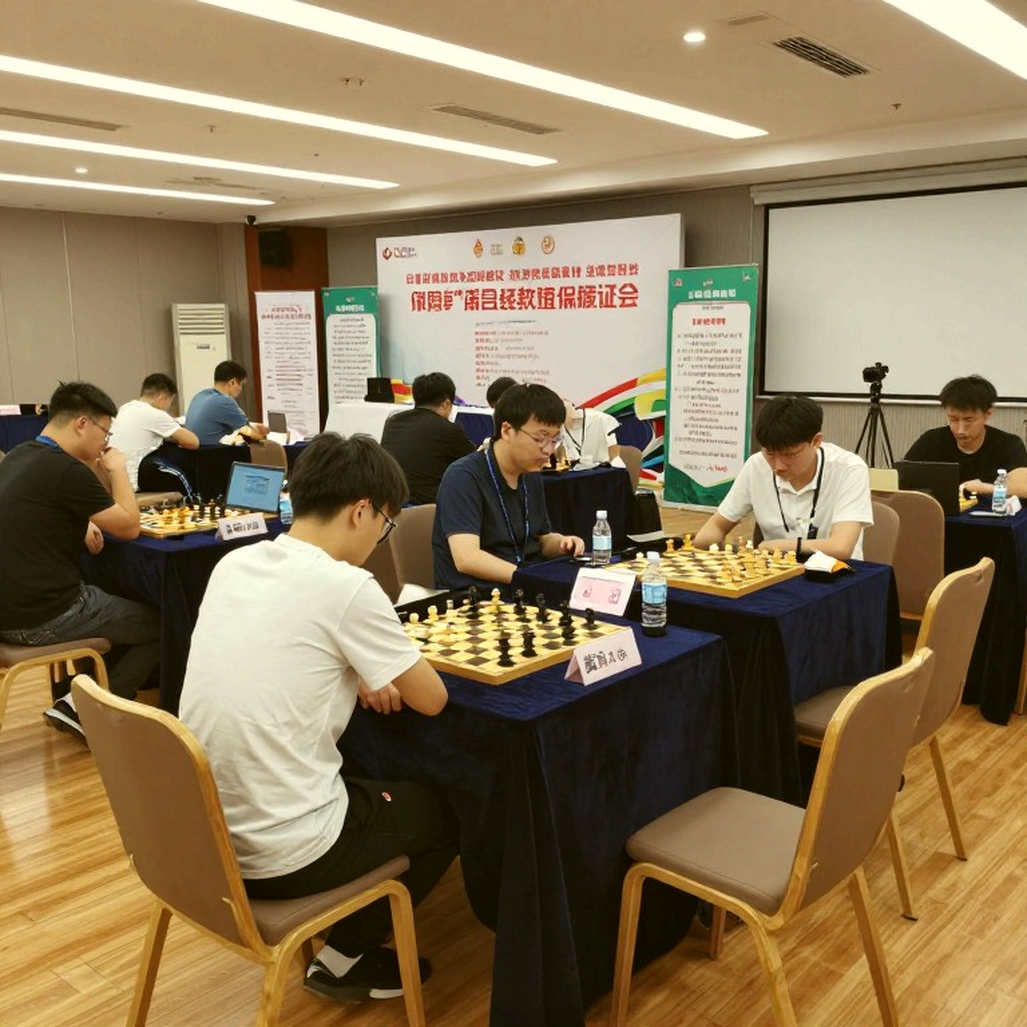
For Vietnamese chess fans, the message from Hong Kong is clear: investing in youth development depth and building a balanced squad might be a more effective path than relying on a few individual stars. The tournament also poses a question for FIDE: how to balance the attractive commercial model with maintaining a diverse chess ecosystem, where stories like Laohawirapap's upset over Arjun Erigaisi at the Samarkand Open can still happen. The bigger picture is that chess is transforming, from a purely individual sport to a more team-oriented and commercial arena. And in that transformation, teams with systems and depth like Dragon Chilling are writing the new rules.